
Pressing and steaming
Does Dry Cleaning Remove Wrinkles? Pressing vs Steaming
You pick up a shirt from the cleaner and it looks sharp. Crisp collar, flat sleeves, no creases. It is easy to assume the cleaning did that. It did not. The cleaning got the garment clean. Something else made it look that way.
Understanding the difference helps you ask for what you actually want, and it explains why a shirt from one cleaner looks better than the same shirt from another.
Cleaning and Finishing Are Two Different Jobs
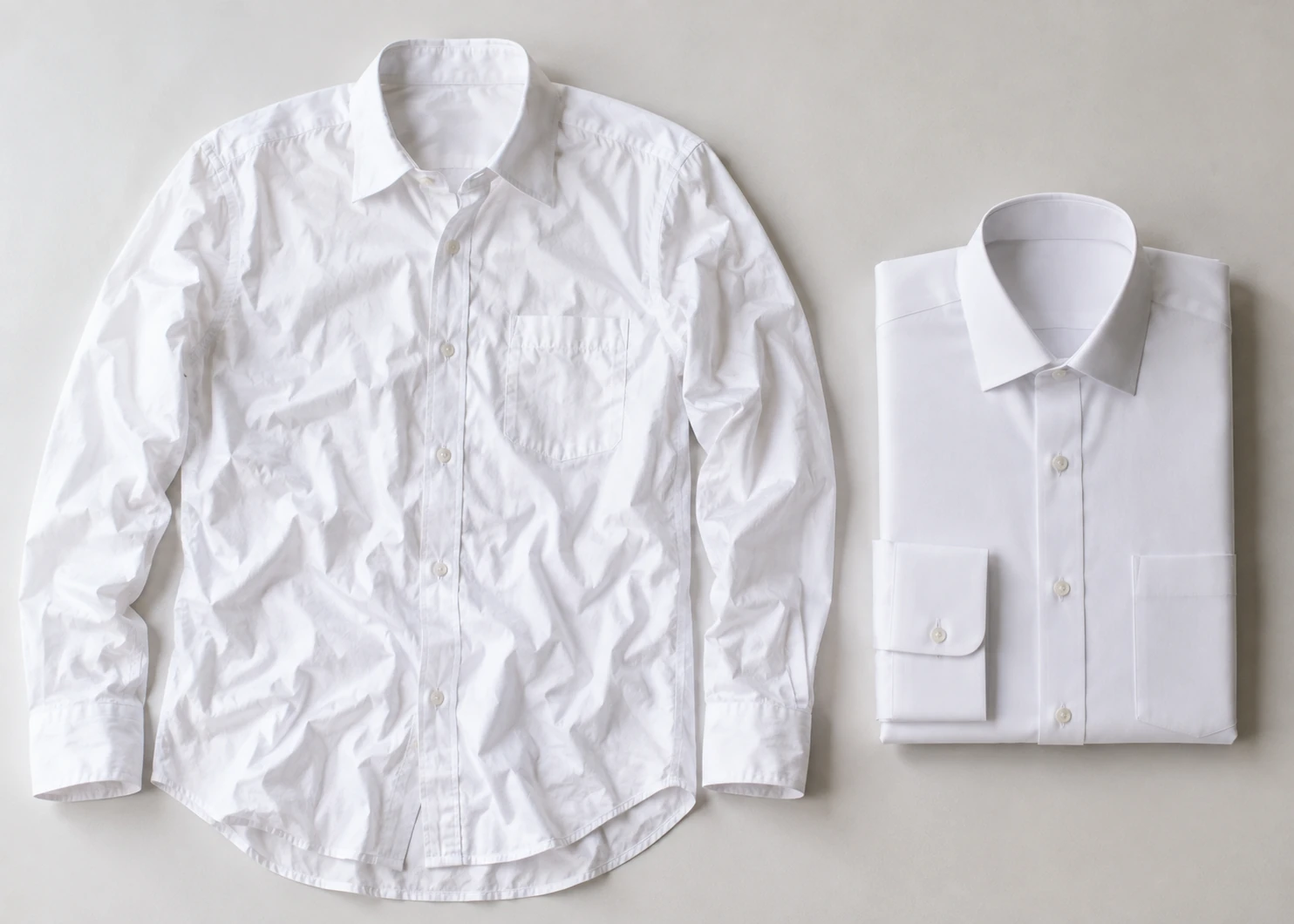
A cleaning order goes through several stages. Cleaning is one of them. Finishing is another.
Cleaning removes soil, oil, and stains. That is all it does. A garment straight out of the machine is clean and usually quite wrinkled.
Finishing is what makes it look right. This is where pressing and steaming happen, and it is the stage most people are actually paying for when they say a shirt came back looking sharp.
So the answer to the question is no. Dry cleaning alone does not remove wrinkles. The finishing that comes after it does.
What Pressing Does
Pressing uses heat, pressure, and a small amount of moisture together.
The garment goes onto shaped equipment that matches the piece. A shirt press has a form for the body, the collar, and the cuffs. A jacket press follows the shoulder, the lapel, and the sleeve. The press closes, holds, and releases. Heat and pressure reset the fibers so they hold the new shape. That is why a pressed shirt has flat panels and a sharp collar. The fabric has been physically flattened and set, not just relaxed.
Pressing is the right choice for cotton shirts, suits, trousers with a crease, and anything that should look structured.
What Steaming Does
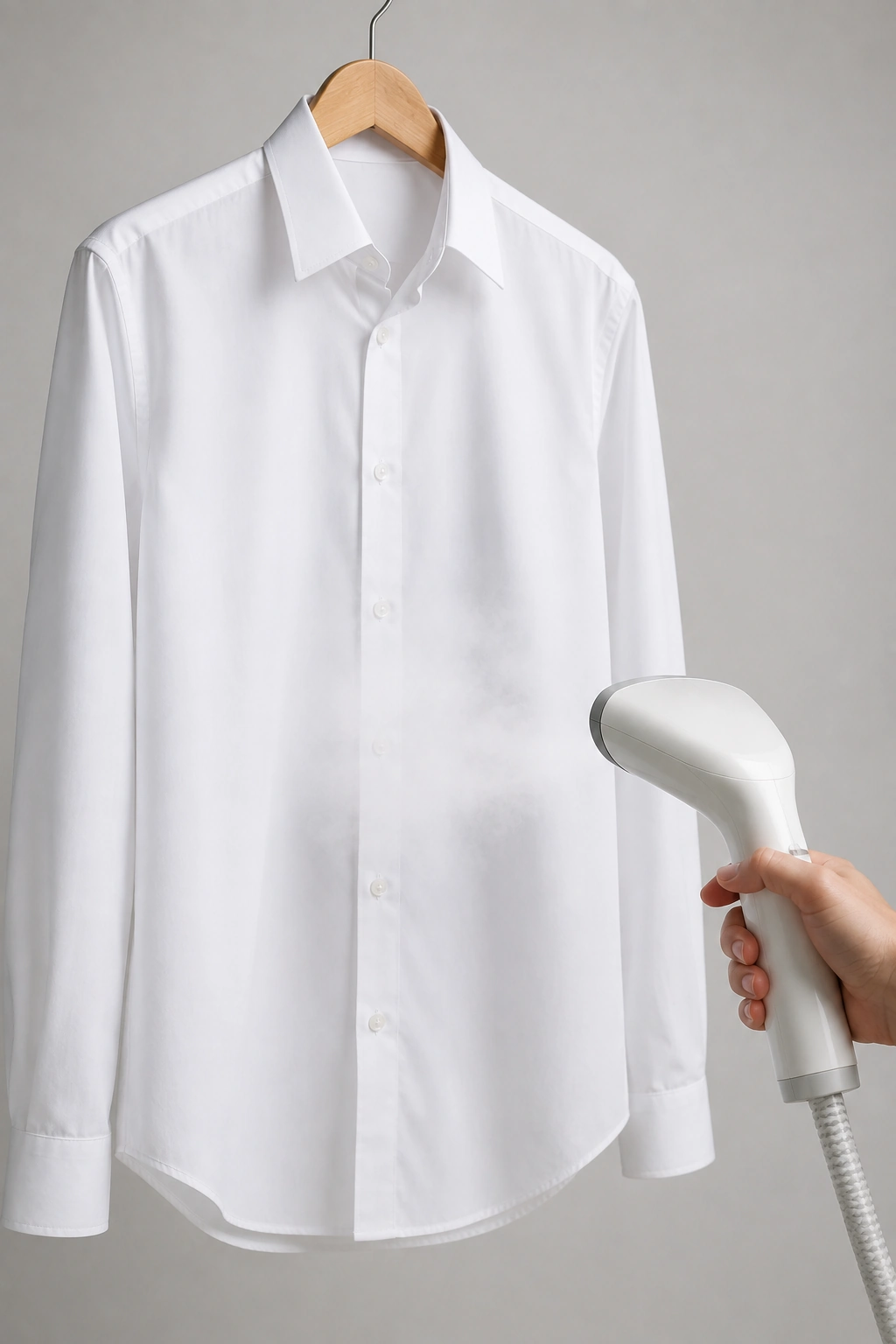
Steaming uses moisture and heat without pressure.
Hot steam passes through the fabric and relaxes the fibers. The weight of the garment then pulls the wrinkles out as it hangs. There is no flattening because nothing presses down. The result is smooth but soft, with no hard creases.
Steaming suits knitwear, silk, delicate fabrics, pleated pieces, gowns, and anything with beading or texture that a press would crush.
Which One Your Garment Needs
The fabric usually decides.
Press these. Cotton dress shirts, suit jackets, trousers, linen, and anything where you want a defined edge.
Steam these. Wool knits, cashmere, silk, chiffon, pleats, gowns, and anything with surface detail.
Some garments get both. A suit jacket might be pressed on the body and steamed around the shoulder to avoid a shine mark.
If you are not sure, say what you want the garment to look like rather than naming a method. A cleaner can work from that.
Why Home Ironing Falls Short
Home irons do a reasonable job. They just cannot match what a press does, for two reasons.
Pressure. A commercial press applies far more force than you can with an iron and your own arm. That is what sets the shape properly.
Shape. A press has a form built for the garment. An ironing board is flat. Curved areas like shoulders, collars, and sleeve heads are hard to do well on a flat surface.
There is also the shine problem. Pressing a wool suit at home often leaves a glossy mark where the iron sat directly on the fabric. Commercial equipment and a pressing cloth prevent that.
Wrinkles That Will Not Come Out
Being honest about the limits.
Set creases in old folds. A garment folded in a drawer for years develops a crease along the fold line that can weaken the fibers. Pressing may soften it. It may not remove it.
Heat damaged fabric. Once synthetic fibers have been melted or glazed by too much heat, the damage is permanent.
Wrinkles in damaged fabric. If the fibers are worn through, no amount of pressing brings the surface back.
Permanent pleats that have relaxed. Some pleats are heat set at the factory. Once they go, recreating them is specialist work.
Making It Last Longer
A few habits keep a garment looking pressed for longer. Hang it as soon as you get home. Leaving a jacket over a chair overnight undoes a good press. Use wide wooden hangers for structured pieces. Wire hangers leave a bump in the shoulder. Take the plastic off. Trapped moisture softens a crisp finish.
Give a suit a day between wears. Wool recovers its shape if you let it hang.
The Short Answer
Cleaning removes soil. Finishing removes wrinkles.
Pressing uses heat and pressure to set a shape, and suits shirts, suits, and trousers. Steaming uses moisture without pressure, and suits knits, silk, and anything delicate.
If a garment came back looking flat and lifeless, or still creased, the finishing is where to look.
Ask for the Finish You Want
We have cleaned clothes in Chicago since 1989. Most garments are cleaned and finished at our Clybourn Avenue plant.
Every piece is checked before it goes back on the rack. If the finish is not right, it goes back through rather than out the door.
Tell us how you want a garment finished when you drop it off, or read more about our dry cleaning service. Standard turnaround is two days, and same day service is available at no extra charge.