
Seasonal garment care
How to Store Clothes Between Seasons Without Damage
Chicago makes you own two wardrobes. Heavy coats and wool for winter, light cotton and linen for summer. The set you are not wearing has to go somewhere for six months. How you pack it away decides what you find next season. Clothes come out of storage with moth holes, yellow stains, or a musty smell. All three are avoidable.
The Short Answer
Clean everything before you store it. Skip plastic dry cleaning bags. Fold heavy knits instead of hanging them. Store clothes somewhere cool, dry, and dark.
Those four steps prevent almost every storage problem. The rest of this guide explains why each one matters, and what to do for specific fabrics.
Always Clean Clothes Before Storing Them
This is the step people skip, and it causes the most damage.
A sweater can look clean and still hold body oil, sweat, and food traces you cannot see. Moths are not drawn to wool itself. They are drawn to what is left on it. Sweat and food residue are what bring them in.
Invisible stains matter too. Spilled white wine, clear soda, or sugar in coffee dries without leaving a mark. Six months later that spot turns yellow or brown as the sugar oxidizes. By then it has set into the fibers and is much harder to remove.
Wash or dry clean every item before it goes into storage. Not just the pieces that look dirty.
Skip the Plastic Bag
Your dry cleaning comes home under a thin plastic bag. That bag is for the trip home, not for storage.
Plastic traps moisture against the fabric. Over months that leads to mildew and a musty smell. The plastic can also break down yellow light colored fabrics, and it stops air moving through the garment.
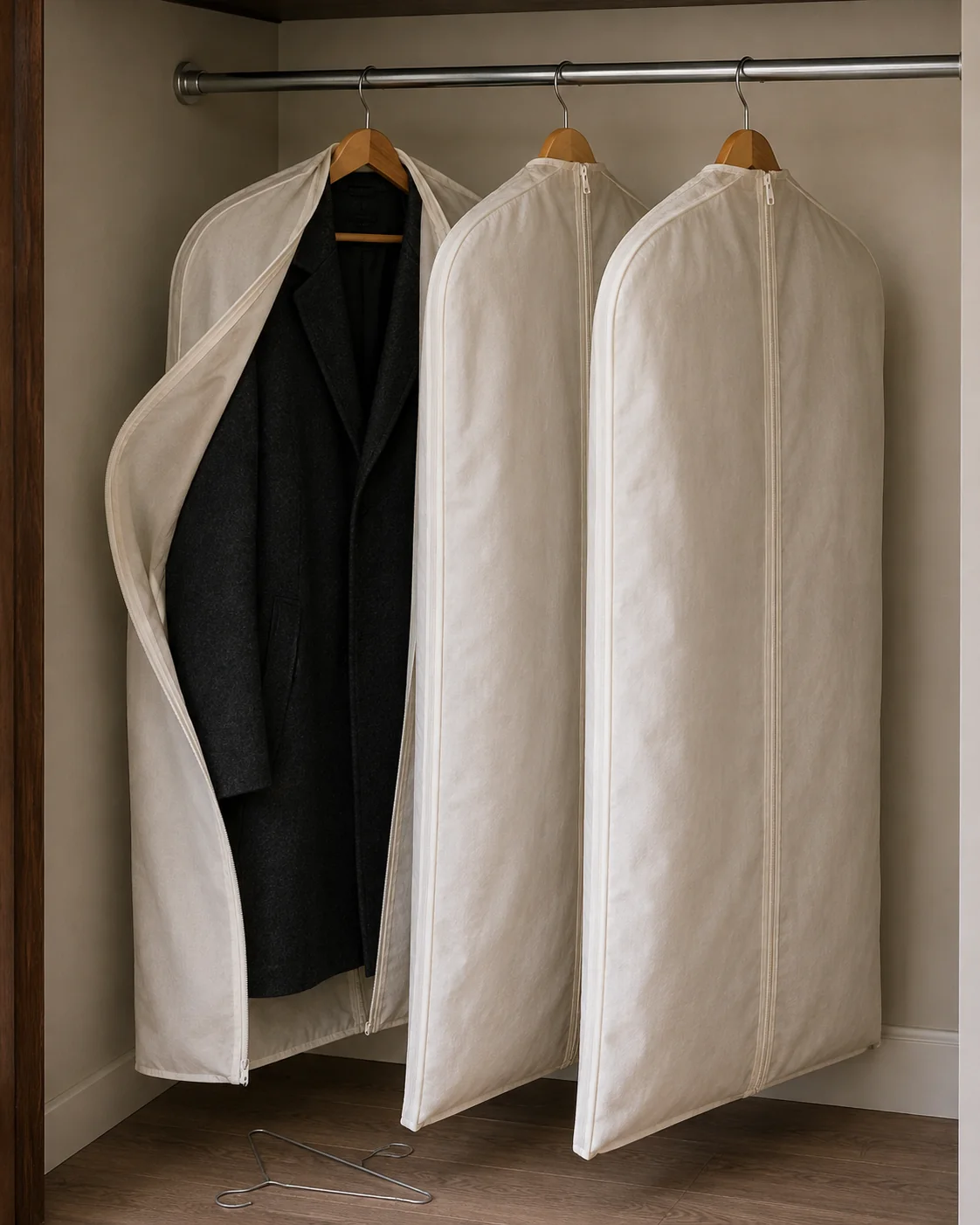
Use a cotton garment bag instead. Cotton keeps dust off while letting the fabric breathe. An old cotton pillowcase with a hole cut in the top for the hanger works just as well.
For folded items, use a cardboard box or a canvas bin. Avoid sealed plastic tubs unless the clothes are completely dry and the space stays dry year round.
Fold Heavy Knits, Hang Structured Pieces
What you do here depends on the garment.
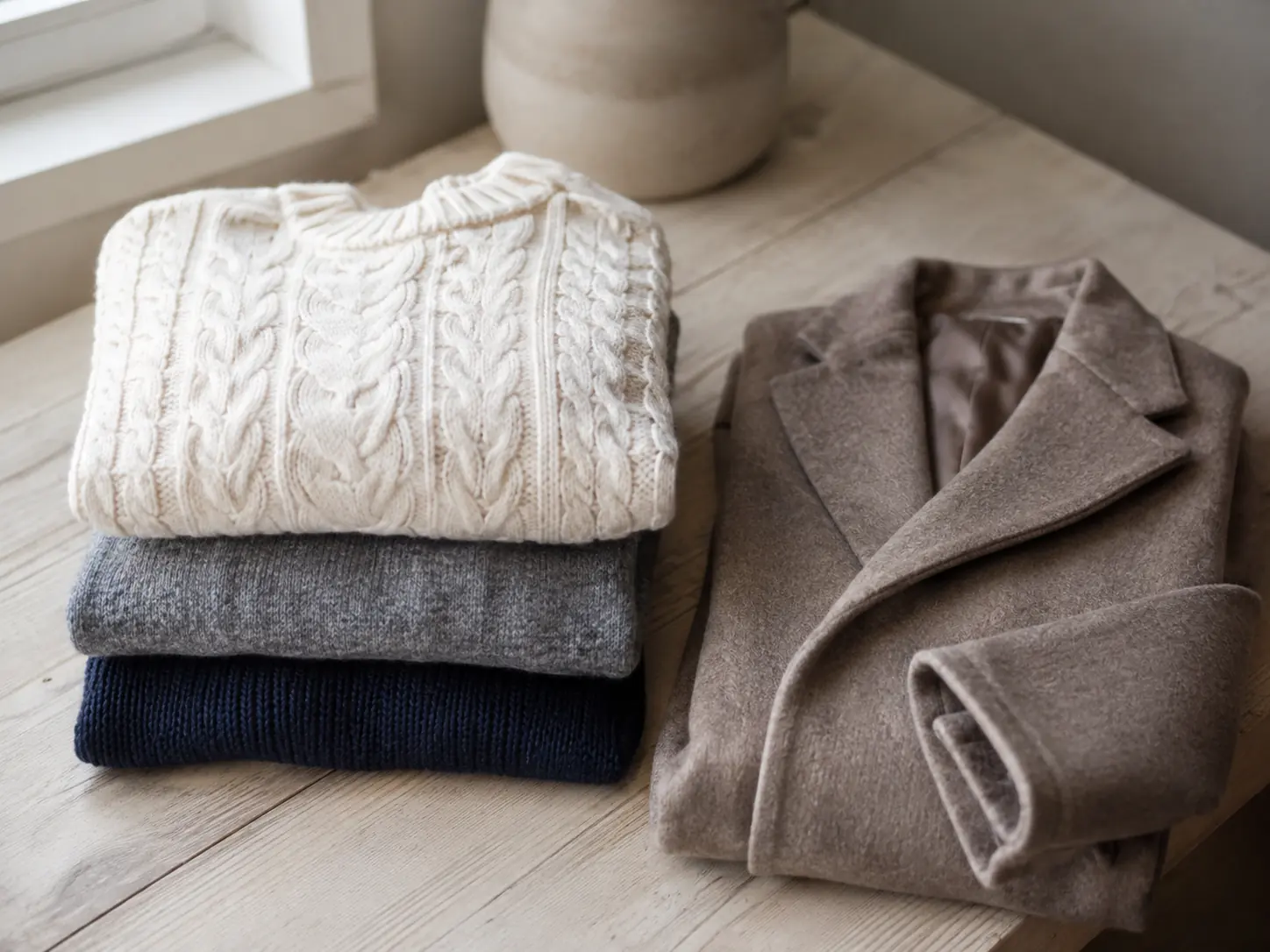
Fold these: sweaters, cardigans, knitwear, and anything heavy and stretchy. Hanging a wool sweater for six months pulls the shoulders out of shape. The weight of the knit stretches it and it does not go back.
Hang these: coats, suits, blazers, and structured dresses. These hold their shape better on a hanger.
Wire hangers are the problem here. They are thin, so all the weight of a coat sits on two narrow points. That leaves a bump in each shoulder and can rust onto the fabric. Wooden or padded hangers spread the weight and keep the shoulder line straight.
Choose the Right Spot
Three things ruin clothes in storage: heat, damp, and light.
A Chicago basement gets humid in summer, and damp brings mildew. An attic swings from very hot to very cold, and that stress is hard on natural fibers. A window seat fades color over months of sun.
The best spot is a closet in the main part of your home. Cool, dry, dark, and stable. A spare bedroom closet or under a bed both work well.
If the basement is your only option, keep boxes off the concrete floor. Put them on a shelf or a low rack so air can move underneath.
Keeping Moths Away
Cedar and lavender both help, but neither one kills moths. They work as a mild deterrent, so treat them as backup rather than your main defense.
Clean clothes are the real protection. A moth lays eggs on wool that carries food or sweat traces. On a clean sweater there is far less to attract her.
Mothballs work, but the smell soaks into fabric and is very hard to remove. Most people find the trade is not worth it.
Cedar loses its scent after about a year. Sand the block lightly or replace it to bring the oils back.
Caring for Specific Fabrics
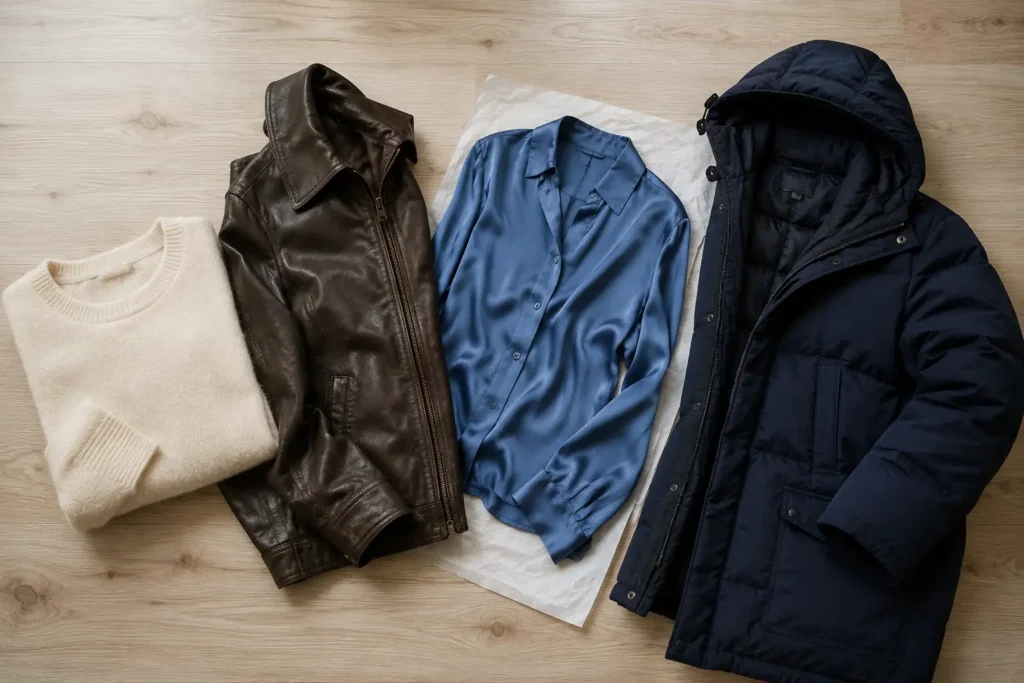
Wool and cashmere. Clean first, then fold with acid free tissue paper between the layers. These are the fabrics moths go for, so do not store them dirty.
Down coats and parkas. Clean and dry them fully, then store loosely. Compressing down for months flattens the fill and the coat loses warmth. Hang it or lay it flat rather than stuffing it into a vacuum bag.
Leather and suede. These need air. Never seal them in plastic. Use a cotton bag and keep them out of damp rooms, because leather grows mold in humidity.
Silk. Store away from light and avoid wire hangers, which mark the fabric. Silk yellows with age, and storing it clean and dark slows that down.
Linen and cotton. The easiest to store. Clean, fold, and keep dry. Both crease deeply, so refold along different lines if you can.
A Simple Checklist
Before you close the box:
- Everything is clean, including items that look clean
- Nothing is stored damp
- Plastic dry cleaning bags removed
- Heavy knits folded, structured pieces hung
- Wire hangers swapped for wood or padded
- Pockets emptied
- Storage spot is cool, dry, and out of direct light
When It Is Worth Using a Cleaner
Some pieces are worth handing over rather than washing at home.
Wool coats, suits, down parkas, and anything with beading or lining are hard to clean properly in a home machine. So is anything with an invisible stain you want treated before it sets. A professional clean removes the oils and sugars that cause yellowing and attract moths, which is exactly what storage damages.
At Greenspin Cleaners we clean with Intense solvent, a modern process that is gentle on fabric, color, and finish. Standard turnaround is two days, and same day service is available at no extra charge if you are packing up this weekend.
Bring your winter coats in before they go into the closet, or book a free pickup and we will collect them from your door. We have been cleaning for Chicago families since 1989, and our plant is on site at Clybourn Avenue, so most garments never leave our team.