
Dry cleaning safety
Is Dry Cleaning Toxic? Modern Solvents Explained
If you have ever pulled a suit out of a plastic bag and caught a sharp chemical smell, you have probably wondered what is actually on your clothes.
It is a fair question. For decades the dry cleaning industry ran on a solvent that regulators now class as a serious health risk. That solvent is being phased out across the country.
Here is what was in the old process, what has replaced it, and what any of it means for the clothes hanging in your closet.

What People Are Actually Worried About
The concern is not dry cleaning itself. It is one chemical called perchloroethylene, usually shortened to perc.
Perc cleaned clothes well and cost little, so it became the industry standard. Around 28,000 dry cleaners in the United States were using it at one point.
The problem is what it does to people. The EPA has determined that perc presents an unreasonable risk to health, and it is treated as a likely human carcinogen. The risk falls hardest on the people who work around it all day, and on anyone living above or beside a shop that uses it.
Perc Is Being Phased Out
This is the part most people have not heard.
In December 2024 the EPA issued a final rule banning most uses of perc. The rule took effect in January 2025 and sets a ten year phaseout for dry cleaning.
The timeline works in stages. Any dry cleaning machine bought after June 2025 cannot use perc at all. Older machine types come out of service sooner than newer ones. After December 2034 no dry cleaner in the country will be allowed to use it, and perc based spot removers go with it.
So the honest answer to the question is this. The chemical that made people worry about dry cleaning is on its way out by law, and many cleaners moved off it years before they had to.
What Cleaners Use Instead
Several alternatives are in use today.
Hydrocarbon solvents. Petroleum based, gentler on fabric, and not classified the way perc is. Widely used across the industry.
Silicone based systems. Often sold under brand names. Marketed as gentle on colour and finish.
Liquid carbon dioxide. Uses pressurised CO2 instead of a chemical solvent. Effective but the equipment is expensive, so it is rare.
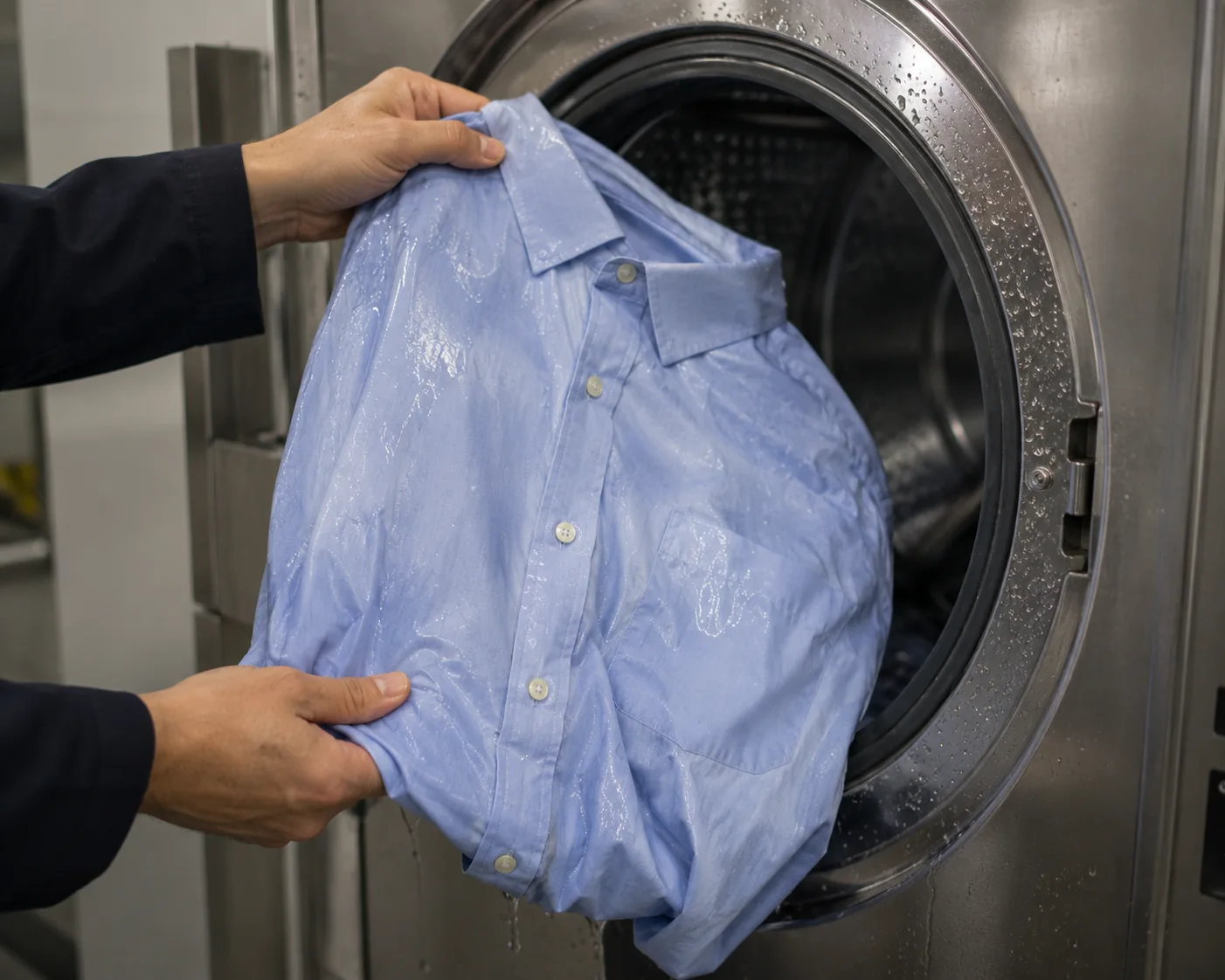
Professional wet cleaning. Water based, with specialised machines and detergents that control agitation and drying. Good for many garments, though not everything.
None of these is a marketing invention. They are working systems, and most cleaners now run one of them.
What Reaches Your Clothes
Here is the part people care about most.
A properly run dry cleaning cycle does not leave solvent sitting in your clothes. The machine recovers the solvent, then the drying and finishing stages remove what is left. Garments should come back dry, with no chemical smell.
That smell is the thing to pay attention to. If clothes come home smelling sharp, it usually points to a machine that is not recovering properly or a cycle that was cut short. It is a sign of a process problem, not a normal part of dry cleaning.
If you notice it, say something. A cleaner who cares will want to know.
What You Can Do
A few simple habits help.
Take the plastic off. That bag is for the trip home. Leaving it on traps any remaining vapour against the fabric, along with moisture.
Air new cleaning out. Hang garments somewhere with airflow for a few hours before they go into the closet. This costs nothing and solves most concerns.
Ask what your cleaner uses. Any shop should be able to tell you plainly. A vague answer is worth noticing.
Do not over clean. Cleaning only what needs cleaning is better for the fabric and means less of everything else too.
A Word on Green Claims
Terms like green, organic, and eco friendly are not regulated in this industry. Any shop can print them.
Ask the specific question instead. What solvent do you use, and is the cleaning done here or sent out. Those two answers tell you more than any label on the window.
Some genuinely gentler systems exist. Some shops use the words without changing anything. The difference only shows up when you ask.
The Short Version
The health concern around dry cleaning came from perc, and perc is being phased out under federal law by 2034.
Modern solvents are gentler, and a properly run cycle leaves nothing behind in your clothes. Take the plastic off, air garments out, and ask your cleaner what they use.
How We Clean
We have cleaned clothes in Chicago since 1989. Most garments are cleaned and finished at our Clybourn Avenue plant.
We use Intense solvent, a modern process that is free of perc. It lifts oils, dirt, and stains while staying easier on fabric, colour, and finish.
Because our plant is on site, we can tell you exactly how your garment was handled rather than passing the question along to somewhere else. If you want to know more about the process, ask us or read about our dry cleaning service.