
Dry cleaning explained
Why Is It Called Dry Cleaning?
Dry cleaning is called dry because no water is used. Your clothes still get wet. They go into a machine filled with liquid solvent, move through it, and come out. The solvent drains away and the garment is dried and pressed. So the process is wet. It is just not water. That is the whole answer, and it confuses people every single day.
Is Dry Cleaning Actually Dry?
No. Nothing about it is dry.
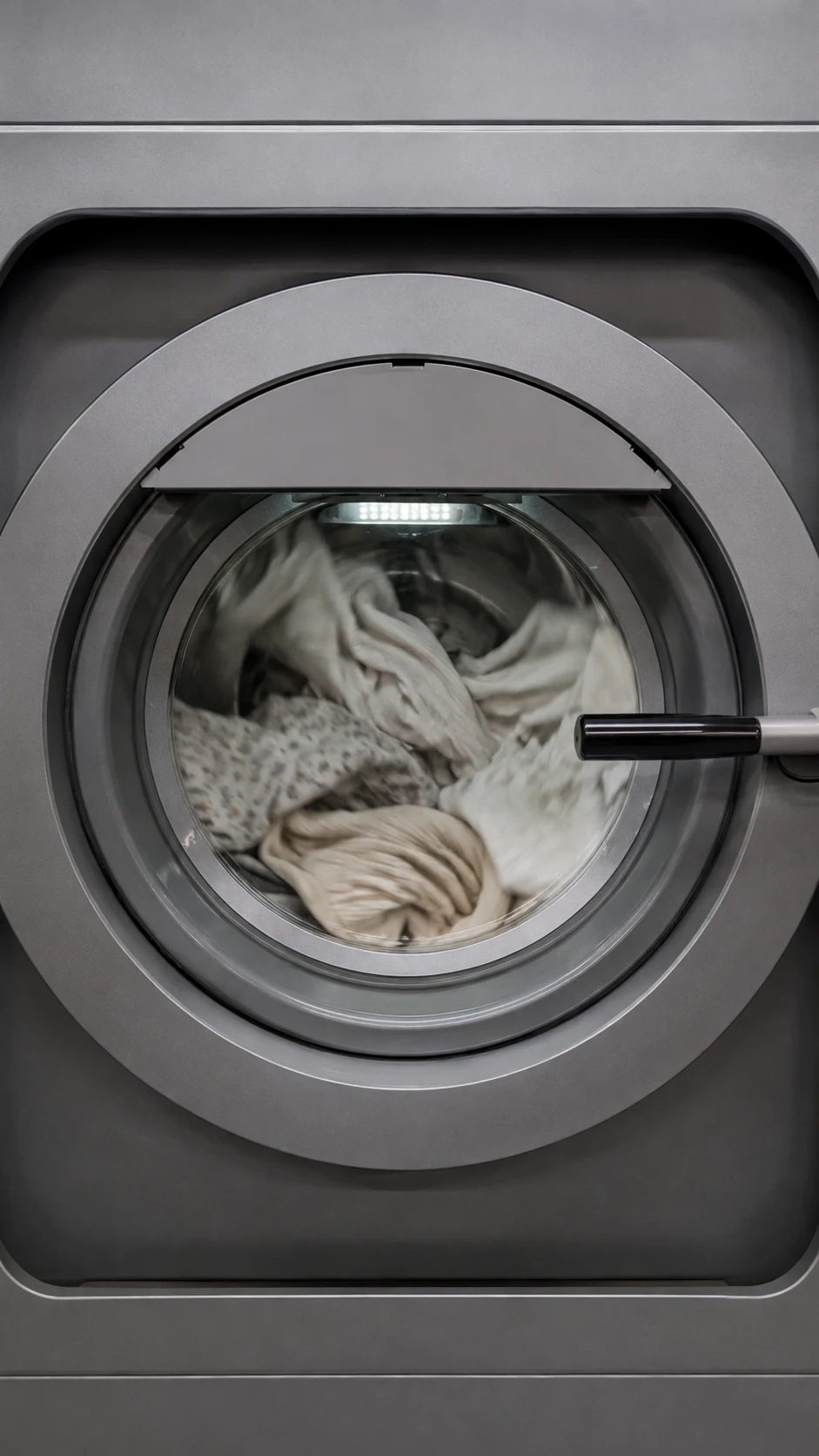
The garment is fully soaked in liquid. If you opened the machine mid-cycle you would see it swirling, exactly like a washing machine.
The difference is what fills the drum. A washing machine uses water and detergent. A dry cleaning machine uses solvent.
Why Water Is Not Used
Water damages a lot of what hangs in your closet.
It shrinks wool. It leaves silk stiff and dull. It pulls the shape out of a lined jacket. And it does not dissolve oil, so the body oil along your collar stays exactly where it is.
Solvent handles all four. It lifts oil and grease, and it does not swell the fibers the way water does. That is why a wool coat keeps its shape and a silk blouse keeps its drape.
Where the Name Came From
In the 1800s, cleaning clothes meant water and soap. That was the only method.
Then people worked out that certain liquids could lift grease without water. To anyone in the trade, that was the important part. Wet meant water. Dry meant no water.
The first patent came in 1821. A New York tailor named Thomas Jennings patented a method he called dry scouring. He was solving a real problem. His customers had fine wool and silk that water would ruin, so dirty garments were often just thrown away.
A few years later a Parisian dye-works owner, Jean-Baptiste Jolly, built a business on the same idea. The story goes that a lamp was knocked over onto a tablecloth and the stain lifted when the fuel dried. Sources disagree on the year and on what was in the lamp, so treat that part as trade legend.
Either way, the name was set. Dry meant no water, and it stuck.
What Is in the Machine Today
Early solvents were petroleum-based. They cleaned well and caught fire easily. Shop fires were common enough that some cities limited where cleaners could open.
The trade moved on. A solvent called perc took over for most of the twentieth century. It did not burn, and it cleaned very well.
Modern cleaning uses gentler systems again. We clean with Intense solvent, which lifts oils and dirt while staying easier on colors, linings, and finishes.
Two hundred years on, the idea has not changed. Lift the grease, keep water away from the fabric.
Why Nobody Renamed It
By the time anyone might have fixed it, the term was everywhere. On shop signs. On care labels. In the way people talk.
“Solvent cleaning” would be more accurate. Nobody was ever going to say it. So dry cleaning it stayed, and every few years someone works out that their clothes were soaking the whole time.
Quick Answers
Does dry cleaning use water? No. It uses liquid solvent instead.
Are my clothes wet during the process? Yes, fully. Just not with water.
Why not just use water? It shrinks wool, damages silk, pulls jackets out of shape, and leaves oil behind.
Is the solvent still on my clothes? Most of the solvent is recovered during the cleaning and drying cycle before the garment is finished.
Why is it still called dry cleaning? The name was set two hundred years ago and never changed.
Bring Us Something Water Cannot Handle
We have cleaned clothes in Chicago since 1989. Most garments are cleaned and finished at our Clybourn Avenue plant.
Read more about our dry cleaning service, or use our free pickup and delivery across the neighborhoods we serve.